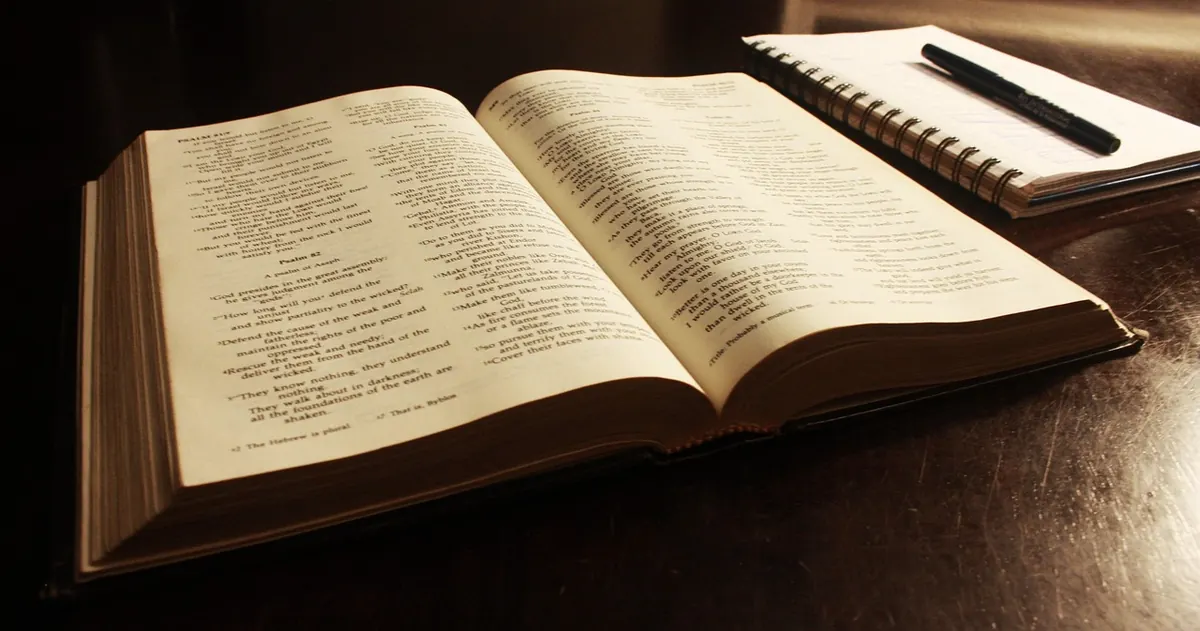
Most Christian parents can quote a verse about discipline and feel vaguely guilty about the rest. But the Bible's teaching on parenting is less a rulebook than a portrait of patient, daily discipleship. The passages below are the ones parents and pastors return to most often — not because they answer every question, but because they set a direction. Your walk with God comes first. Your words matter. Your patience is not optional. And your child is a person being prepared for something beyond your house. Here are seven passages, what each one actually says, and one thing you can do about it this week.
1. Deuteronomy 6:6–7: Faith Is Caught in Ordinary Moments
"These commandments that I give you today are to be on your hearts. Impress them on your children. Talk about them when you sit at home and when you walk along the road, when you lie down and when you get up."
Notice the order. Before God tells parents to teach, he tells them to have his words on their own hearts. Children absorb what you love far more than what you lecture about. The second half is just as practical: the setting for faith conversations is the kitchen table, the car, the walk to the bus stop, the last five minutes before lights out.
Try this: pick one recurring moment — the school run, bedtime — and use it for a two-minute conversation about something God is doing in your family. You don't need a curriculum. Repetition beats eloquence.
2. Proverbs 22:6: A Direction, Not a Guarantee
"Start children off on the way they should go, and even when they are old they will not turn from it." This verse has comforted and haunted parents in equal measure. It is a proverb — a general principle about how life usually works — not a formula that guarantees a particular outcome. Countless faithful parents have watched a grown child walk away, and the Bible never treats that as proof of parental failure.
What the verse does ask is early, consistent shaping. Begin while your child is young, aim them toward Christ, and keep the long view. If your child is in a hard season right now, don't read every struggle as evidence that you got it wrong.
3. Ephesians 6:4: Restraint and Nurture Together
"Fathers, do not exasperate your children; instead, bring them up in the training and instruction of the Lord." The verse has two halves, and most of us lean on one. The first half is a warning: parents can provoke their children to resentment. Common culprits include rules that make no sense, a tone that stings more than the words, correction that never comes with relationship, and promises that quietly get broken.
The second half gives the alternative — training and instruction, which implies time, repetition, and warmth. Practical step: look at one rule in your home and ask whether it's shaping your child or simply irritating them. If it's the latter, change it or explain it.
4. Colossians 3:21: The Cost of Constant Criticism
"Fathers, do not embitter your children, or they will become discouraged." This verse adds a consequence the previous one leaves out. Children who hear mostly what they get wrong eventually stop trying. Discouragement looks like a teenager who shrugs, a nine-year-old who quits before the game starts, a child who stops telling you things.
Watch your ratio. If a typical evening holds eight corrections and one compliment, the math is working against you. Praise specifically — not "good job," but "you went back and apologised to your sister, and that took courage."
5. Proverbs 29:15, 17: Discipline Is Part of Love
"A rod and a rebuke impart wisdom… Discipline your children, and they will give you peace." Scripture takes discipline seriously. But in Proverbs, discipline means training — structure, boundaries, predictable consequences, and a parent who stays calm while applying them. It is not a licence for anger, humiliation, or frightening a child.
Christian families read the "rod" passages differently, and that is a matter for your own conscience, your church, and wise counsel. What Scripture never endorses is harshness or correction delivered in rage — the very things Ephesians 6:4 and Colossians 3:21 forbid. If your own temper is the problem, or your child's behaviour worries you, speak with a pastor or a qualified counsellor rather than carrying it alone.
6. Psalm 127:3–4: Children Are a Gift, Not a Project
"Children are a heritage from the Lord, offspring a reward from him. Like arrows in the hands of a warrior…" The arrow image is worth sitting with. Arrows are not meant to stay in the quiver. They are shaped, aimed, and released.
That reframes the whole task. You are not managing a child until they move out; you are preparing an adult to live faithfully without you. Ask yourself what your child will need at twenty-two: a settled faith, the ability to work hard, honesty, the habit of apologising. Then work backwards to what you practise this month.
7. 1 Thessalonians 2:11–12: Encouraging, Comforting, Urging
Paul describes his care for the church "as a father deals with his own children, encouraging, comforting and urging you to live lives worthy of God." Three verbs, and they cover most parenting days. Some moments need encouragement. Some need comfort. Some need a gentle push toward something better.
Notice also the phrase "each of you." Not the children as a group — each one. Your loud child and your quiet child need different things from the same verse. This week, ask which of the three your child needs most, and give it deliberately.
Putting It Into Practice
You cannot apply all seven passages at once, and you don't need to. Choose one and stay with it for a month.
- Anchor one daily moment for faith conversation — a drive, a walk, bedtime.
- Audit one rule and either explain it clearly or drop it.
- Name one specific thing each child did well, today.
- Decide consequences in advance so you're not disciplining out of frustration.
- Pray for each child by name, out loud when you can, about the thing they're actually facing.
Parenting well is not the same as parenting perfectly. These passages describe a parent who keeps turning toward God and toward their children, imperfectly and repeatedly, for years. That is a pattern any of us can start again this evening.
Photo: AgnieszkaMonk / Pixabay